If your money seems to vanish somewhere between the food shop, the energy bill and one too many taps at the checkout, a household budget is the fix. It is simply a plan for your money before the month runs away with it, and right now, with UK bills shifting all over the place, that plan matters more than good intentions.
Here’s what you’ll learn:
- how to gather the right numbers
- how to total income properly
- how to split essential and optional spending
- what to do if your budget is tight
- where to cut bills without misery
- how to build a bit of breathing room
What a household budget actually does for you
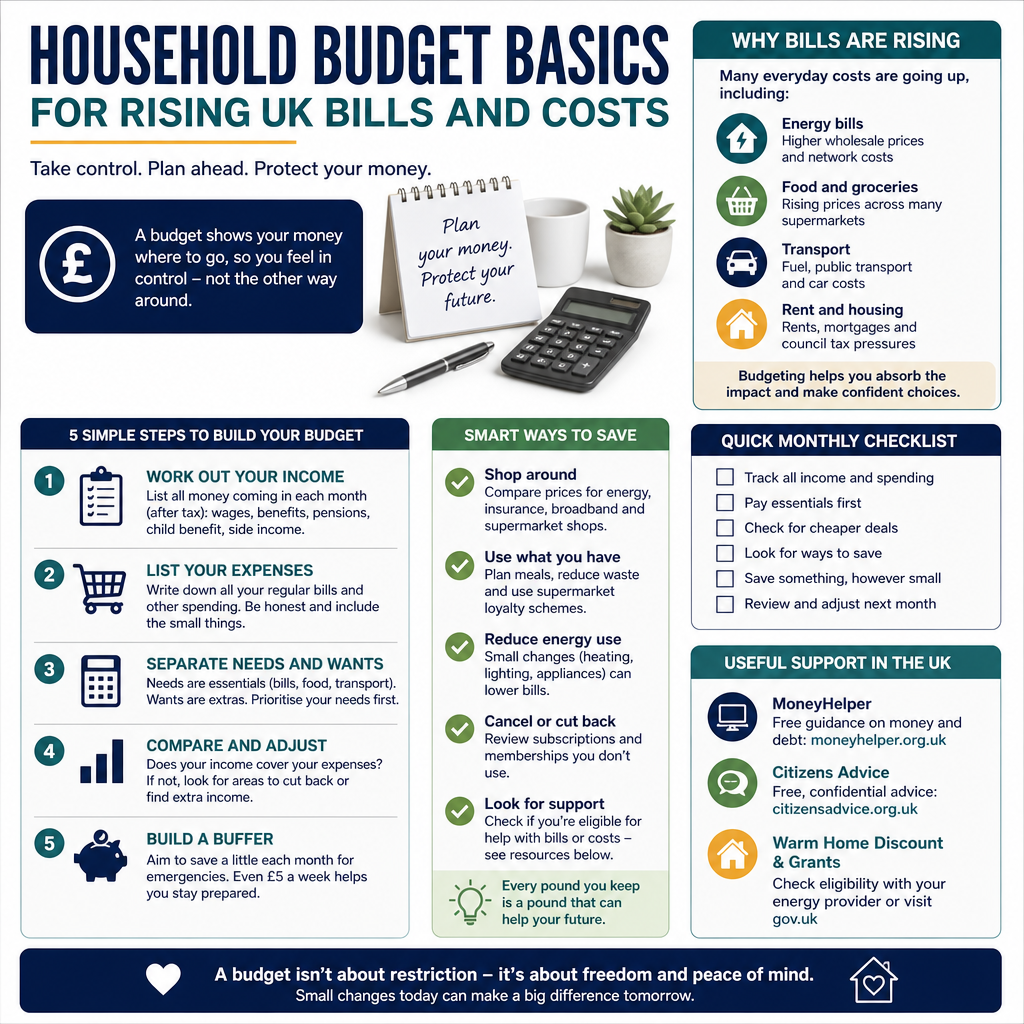
A household budget shows what comes in, what goes out, and what is left after the basics are covered. In plain English, it gives every pound a job before it drifts off into bills, food, subscriptions and all the little extras that never feel big on their own.
Here’s the thing: a budget is not about getting every category perfect. It is about staying in charge when prices keep moving. If your gas bill jumps, your supermarket total creeps up, or the school run suddenly costs more, your budget helps you spot the pressure early instead of finding out when your account is already stretched.
Get the numbers in one place before you change anything
Before cutting anything, look at what is actually happening. Pull together bank statements, direct debits, card payments, receipts, household bills, app histories and any cash spending you can remember. Guesses are usually too flattering. Real numbers are much more useful.
A good budget starts from the life you are already living, not the version of you that never buys lunch out and always remembers the shopping list.
Decide who the budget covers
Make it clear whether the budget is for just you, you and a partner, or the whole household. Shared costs such as rent, mortgage, council tax, food and energy should appear once. Personal spending still needs separate lines, because one person’s gym membership or train fare is not the same as another’s.
That small bit of sorting saves a lot of confusion later.
Use monthly figures, even when bills don’t arrive monthly
Monthly numbers make your budget easier to read. If a bill comes yearly, quarterly or only now and then, divide it down to a monthly amount and add it anyway.
Car insurance, school uniforms, birthdays and Christmas are classic budget wreckers because they feel far away until suddenly they are not. A £360 annual bill is £30 a month. That is much easier to prepare for than one ugly hit.
Work out your total monthly income
Count all regular money coming in after tax. That includes wages, pensions, maintenance, benefits and any side income you can rely on. Use the amount that actually lands in your account, not the headline salary.
If extra income comes and goes, be cautious. Budgeting from your best month is how trouble sneaks in.
If your income changes from month to month
If your pay varies because of shifts, freelance work or zero-hours hours, build your essentials around a lower baseline. In other words, use the amount you can usually count on, not the month when everything lined up nicely.
Then treat anything above that as flexible money. It can top up savings, catch up a bill, cover irregular costs or reduce debt. That approach keeps your core budget sturdy, even when income is not.
List your spending without kidding yourself
Now split spending into clear groups. Fixed costs stay mostly the same each month, like rent or broadband. Flexible costs move around, like food, fuel and takeaways. Both matter, especially when prices are climbing, because fixed costs shape the floor of your budget and flexible costs give you room to adjust.
Essential spending
Start with the bills that keep your home and daily life running: rent or mortgage, council tax, gas and electricity, water, broadband, mobile, insurance, food, transport, childcare and debt repayments. These are the costs to secure first.
If the budget is tight, this section tells you what absolutely has to be covered before anything else.
Non-essential spending
Then add the spending that is not strictly required, but still part of real life: takeaways, streaming services, hobbies, clothes shopping, days out, coffees, little impulse buys. This is not about making your life joyless. It is about noticing patterns.
The trick is to spot what keeps repeating. One forgotten subscription is annoying. Four of them is a budget leak.
Don’t Forget one-off and seasonal costs
This part catches people out constantly. MOTs, school trips, birthdays, boiler servicing, vet bills and back-to-school shopping do not happen every week, but they are still part of normal life.
Think of the rainy Tuesday morning rush when the car suddenly needs a £180 repair and you were already late. That expense feels like a surprise, but the category itself is not. Your budget should make space for these hits before they arrive.
See what’s left over and what that result means
Once income and spending are listed, subtract the second from the first. The result will land in one of three places: money left over, roughly breaking even, or coming up short.
Each result needs a different response. The number is not a judgement. It is just the truth on paper, which is a lot easier to work with than stress in your head.
If you have money left over
Give it a job straight away. Build emergency savings, set up sinking funds, which just means small amounts put aside for future costs, overpay expensive debt, or leave a modest buffer in your current account so the end of the month feels less tight.
Unassigned money has a habit of disappearing.
If you’re managing, but only just
This is the point to tighten weak spots before the next bill rise does it for you. Trim a few categories, spread annual costs into monthly pots, and review suppliers while the budget is still holding together.
A budget that only works in a perfectly normal month is not strong enough.
If you’re overspending
Act fast, but stay calm. Stop the gap getting bigger, protect essentials first, and cut optional spending quickly. If debt or arrears are building, get support early through Citizens Advice or MoneyHelper. Early action is always easier than untangling a pile-up later.
Cut household bills first, because that’s where the big wins live
If you want relief quickly, start with regular bills. Saving £20 or £40 a month in a few places often helps more than endlessly trimming small treats.
Energy, water and broadband
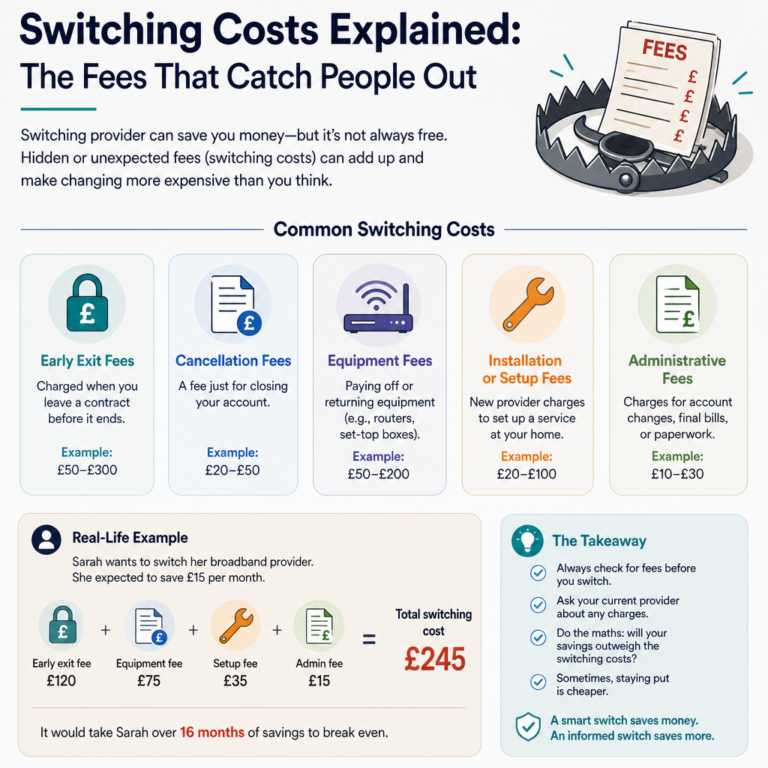
Check tariffs, submit meter readings, reduce waste where you can, and ask about social tariffs if income is tight. Review broadband and mobile packages too. Plenty of households are still paying for speed or data that nobody really needs.
Small switches stack up like loose change in a coat pocket. Easy to ignore at first, useful once it adds up.
Food and supermarket spending
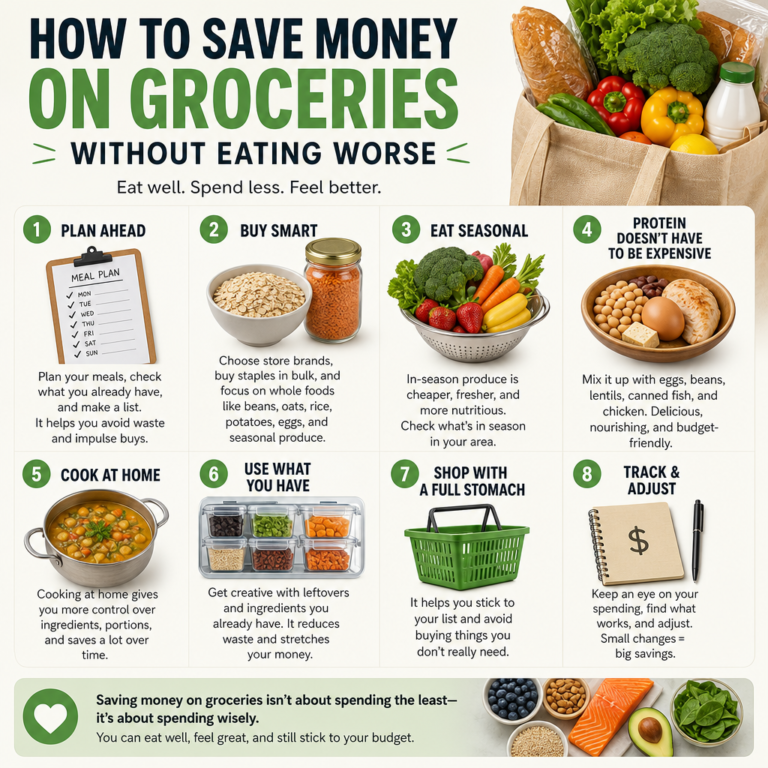
Food is one of the easiest places to drift. Meal planning, own-brand swaps, reduced sections, batch cooking, shopping lists and avoiding the shop when hungry all help. So does noticing the few items that quietly inflate the weekly total, such as grab-and-go lunches, branded snacks or midweek top-up trips.
You do not need a perfect meal plan. You just need fewer expensive surprises.
Transport, childcare and other regular costs
Compare fuel habits with public transport costs if that is realistic for your route. Check school-run spending, workplace travel schemes and childcare support. Do the same with any recurring cost that feels fixed just because it has been there a while.
Sometimes the best saving is simply checking what help exists instead of assuming the current price is the only price.
Make your budget easier to stick to
The best budget is the one you will still use on an ordinary Wednesday. Not the one that looks beautiful for one weekend and then gets ignored.
Try simple budgeting methods
Keep it simple. Category spending works well if you like clear limits. Weekly spending caps help if monthly numbers feel too loose. Separate pots for bills can stop accidental overspending. A buffer account can make timing issues less stressful.
Pick the method that feels boring in the best possible way.
Use apps, spreadsheets or pen and paper
Apps are handy if you like automatic tracking. Spreadsheets suit you if you want control and neat monthly totals. Pen and paper works brilliantly if writing things down makes it feel real.
Use the system you are most likely to update, not the one that sounds smartest.
Review your budget regularly
Check in monthly, and any time a bill changes or life shifts, such as moving home, having a baby or changing jobs. A budget is a working tool. It should move with your life.
Build a bit of breathing room: savings, debt and income boosts
Once the basics are in place, the next job is making the budget stronger.
Start an emergency fund, even if it’s small
A small cushion matters more than people think. Even a modest automatic transfer can start building space between you and the next surprise bill. It is not about hitting a huge number overnight. It is about making the next wobble less painful.
Deal with debt before it snowballs
Separate current spending from old debt, then prioritise repayments properly. If payments are getting hard, seek debt advice early and without embarrassment. MoneyHelper’s debt guidance is a good place to start.
Check for benefits, discounts and flexible extra income
Look into benefits checks, council tax support, childcare help and social tariffs. That is money you should not leave on the table. If extra income would help, think practical and local: overtime, weekend shifts, selling unused items, pet sitting, tutoring or delivery work that fits around daily life.
Common household budgeting mistakes that make everything feel harder
Most budgeting problems come from the same handful of mistakes: guessing figures, forgetting annual costs, building the plan around your best month, ignoring small subscriptions and never updating anything once it is written down. None of these are dramatic. That is why they are so easy to miss.
Fix those first, and your budget usually gets clearer very quickly.
A simple first budget you can set up this week
Start with one hour and a cup of tea. Gather your statements, total your monthly income, list your essential bills, add flexible spending, then check the gap. After that, make one cut and one savings move.
Try this today: cancel one thing you do not miss and move that exact amount into a bills or emergency pot. It is a small start, but small starts are how a household budget begins to feel useful instead of annoying.