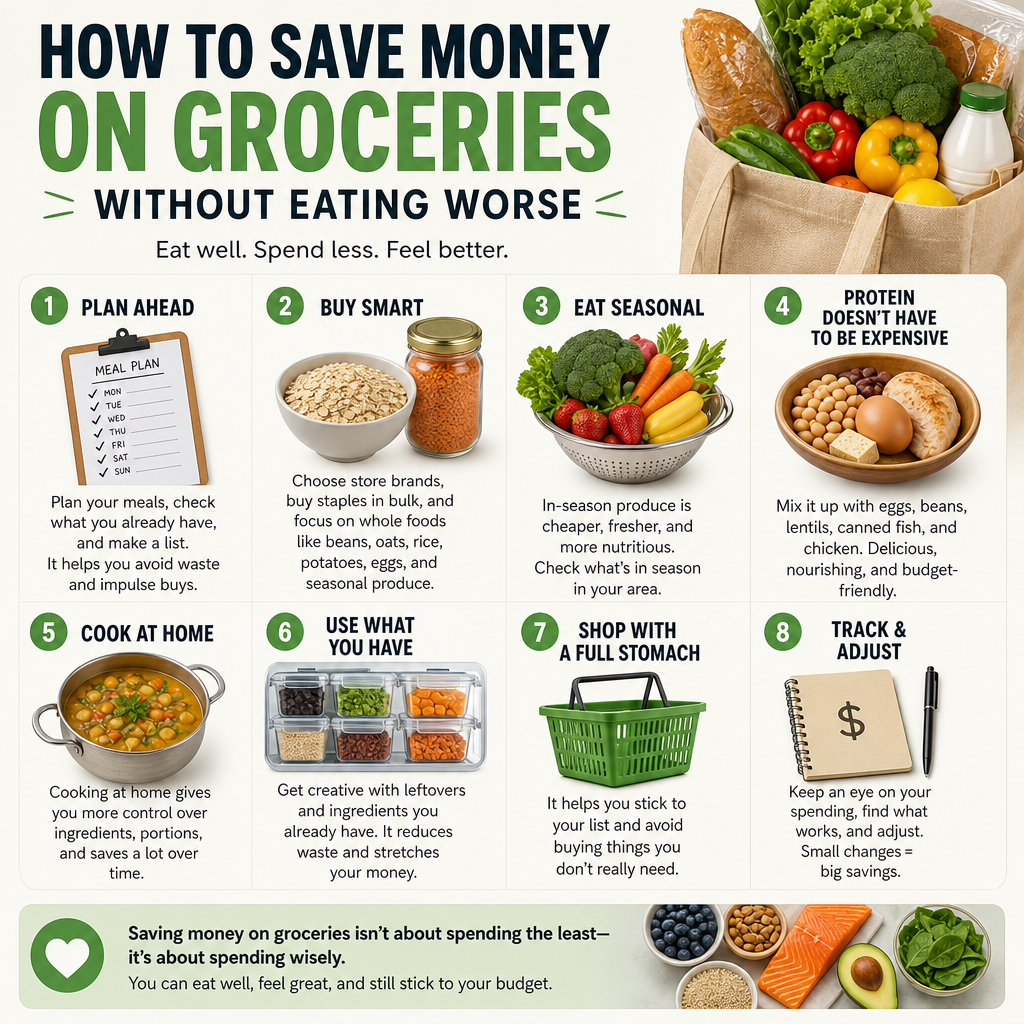
Trying to save money on groceries can feel like a choice between a lower bill and miserable dinners. It isn’t. You can save money on groceries by cutting waste, planning a bit better, and getting pickier about what deserves full price, without living on beige food or pretending a sad cracker plate counts as tea.
A grocery budget is not really about spending less on food. It is about spending less on food you forget, waste, duplicate, or panic-buy at 6:40pm.
Start with the real goal: spend less without dreading dinner
The fastest way to give up on budgeting is to make it joyless. If every “money-saving” shop leaves you with half a cabbage, three tins of beans, and no idea what dinner is on Thursday, the takeaway app starts looking like a lifeline.
So set a better goal. Keep meals filling, familiar, and easy enough for real life. That means buying food you will actually cook, leaving room for convenience where it matters, and trimming the spending that adds very little. The trick is not to become perfect. It is to stop paying premium prices for habits that do not help you eat better.
Early on, focus on the changes that barely feel like sacrifice. Own-brand pasta instead of branded. Frozen veg instead of fresh veg that turns limp in the drawer. One less top-up shop. Those are the savings that stick.
Get clear on where your grocery money actually goes
Before changing anything, get a quick picture of what your food spending actually looks like. Not what you assume it looks like, what it really looks like. Most overspending hides in plain sight: little extras, last-minute lunch bits, drinks, and those “just popping in for milk” trips that somehow cost £18.
Check a month of receipts or banking app categories
Go back through a month of supermarket receipts, email orders, or banking app categories. You are not doing an audit worthy of a finance department. You are just looking for patterns.
Notice how often convenience food turns up. Ready meals, chopped fruit, pre-grated cheese, snack packs, meal deals, and repeated mini-shops usually cost more than the bigger weekly shop feels like. Also notice duplication. Maybe you keep buying pasta, tins, or freezer food because you cannot remember what is already at home.
Food waste matters too. If bagged salad goes slimy every week or yoghurts regularly die at the back of the fridge, that is not a personal failing. It is just a sign to buy less, buy different, or plan better.
Split your spend into useful buckets
Simple buckets make the problem easier to fix. Split spending into main meals, lunches, snacks, drinks, household basics, and impulse buys. That shows where your money is doing a useful job and where it is quietly wandering off.
Sometimes the expensive part is not dinner at all. It is fizzy drinks, little treats, bakery extras, or branded lunch items. That is good news, because cutting back there usually hurts less than attacking proper meals. Fix the easy leak first.
Plan before you shop, so the shop stops running you
Most grocery savings happen before you walk into Tesco, Aldi, or Lidl. Supermarkets are built to make unplanned spending feel reasonable. A bit of planning is how you stop the shop from deciding for you.
Here’s what you’ll learn to do:
- plan meals around your real week
- use what is already at home
- shop with a tighter list
- avoid expensive convenience traps
- waste less after the shop
Build a simple weekly meal plan around your actual week
A useful meal plan is boring in the best possible way. It fits your diary. If Tuesday is chaos and Friday is tired-and-can’t-be-bothered night, plan around that instead of writing down five ambitious meals and hoping for a personality transplant.
Pick four or five dinners, not seven. Leave space for leftovers, a freezer meal, or something easy on toast. Include lunches if those usually catch you out. If one roast chicken becomes wraps the next day and soup after that, even better.
A realistic plan beats an aspirational one every single time. The point is not to become the sort of person who lovingly simmers something every evening. The point is to make 7pm easier and cheaper.
Check cupboards, fridge and freezer first
Shop your kitchen first. That phrase sounds a bit cheesy, but it works. Before writing a list, check what needs using up and what is already hiding in the back.
You probably have more meal starters than you think: pasta, rice, tinned tomatoes, frozen peas, half a bag of potatoes, some wraps, a jar of curry paste. Building one or two meals around what is already there cuts the bill straight away and stops you doubling up.
The freezer is especially easy to ignore. Open it before shopping, not after. A forgotten loaf, leftover chilli, and half a bag of veg can save a whole dinner.
Write a tight list and stick to it
A shopping list sounds basic because it is. It also works. A tight list stops that drifting feeling in the aisles where crisps, dips, and “nice to have” extras start piling up.
It helps to organise the list by section: fruit and veg, fridge, cupboard, freezer. That makes the shop quicker and calmer, especially if you are tired, hungry, or shopping with children asking for snacks every twelve seconds. The less wandering, the less random spending.
Shop smarter in the supermarket
Once you are in the shop, a few habits can lower the bill immediately. Not with extreme couponing energy, just with better decisions in the places supermarkets make easiest to overlook.
Compare unit prices, not just shelf prices
Shelf price tells you what you pay today. Unit price tells you what something actually costs by weight or volume, usually per 100g, per kg, or per litre. That is the number worth watching.
A smaller pack can look cheaper but cost more per gram. A supermarket offer can do the same. The tiny print on the shelf label is not there for decoration. Once you start checking it, you spot fake bargains quickly.
Buy own-brand where it makes no real difference
Some branded items are worth it if you genuinely notice the difference. Most staples are not. Own-brand chopped tomatoes, pasta, oats, rice, flour, tinned beans, and cleaning basics are usually easy wins.
In cooked meals, plenty of swaps are basically invisible. Nobody is detecting premium flour in Tuesday pancakes. Nobody is mourning the brand name on oats. Save the branded spend for the things you actually care about.
Skip the convenience mark-up
Convenience food is not evil. It is just expensive. Pre-grated cheese, chopped onions, portioned fruit, microwave rice, and jarred sauces often cost far more than the same ingredients in simpler form.
The catch is that some convenience is worth paying for if it stops a takeaway. But most of the time, five extra minutes at home saves real money. Grating your own cheese and chopping your own peppers is not glamorous, though it adds up fast across a month.
Time your shop for yellow sticker reductions
Reduced sections can be brilliant if you use them properly. Bread, meat, dairy, and ready meals often get marked down later in the day. According to the Food Standards Agency guidance on freezing, food can often be frozen before its use-by date, which makes reductions much more useful.
Only buy reduced food if it fits your plan or can go straight into the freezer. A bargain that rots in the fridge is just full-price waste wearing a yellow sticker.
Choose lower-cost foods that still make proper meals
Saving money does not mean eating less. It usually means changing the balance of what goes in the trolley so meals stay solid and the pricey bits stop doing all the heavy lifting.
Use frozen and tinned foods as shortcuts, not compromises
Frozen veg, tinned tomatoes, beans, sweetcorn, and fruit are budget staples for a reason. They last, they reduce waste, and they save prep time. NHS advice on eating a balanced diet includes fresh, frozen, tinned, dried, and juice forms of fruit and veg, so frozen peas are not some nutritional defeat.
A bag of frozen stir-fry veg can rescue dinner faster than a hopeful punnet of mushrooms slowly dissolving in the fridge drawer. Tinned tomatoes can become pasta sauce, soup, chilli, or curry without fuss.
Stretch meat instead of centring every meal around it
Meat is often the expensive centre of the shop. One of the easiest ways to spend less is to use a bit less of it without announcing some grand lifestyle overhaul.
Add lentils to mince for chilli, bolognese, cottage pie, or tacos. Use chicken in a pasta bake or curry where it is mixed through, rather than giving everyone a giant portion. Treat meat more like part of the meal than the entire event. The plate still feels normal, just cheaper.
Lean on cheap staples that actually earn their place
Potatoes, pasta, rice, oats, eggs, lentils, beans, and bread are not exciting on their own. That is not the point. They are flexible, filling, and useful across dozens of meals.
Keep a small set of these always in the house. Then dinner is rarely starting from zero. Jacket potatoes, porridge, egg fried rice, lentil soup, toast with eggs, pasta with tomato sauce, all of those are affordable because the base ingredients do a lot of work.
Cook in ways that save money twice
Good cooking habits save money once at the checkout and again on the evenings when you are too tired to start from scratch. That second saving matters more than most budgeting tips admit.
Batch cook the meals you know You’ll eat
Batch cooking only works if you like the food enough to eat it again. Stick to meals that freeze well and reheat properly: chilli, pasta sauce, curry, soup, traybakes.
A bigger pan does not take much more effort than a small one. If two extra portions go in the freezer, future-you gets a cheap, fast dinner instead of staring into the fridge and ordering takeaway.
Turn leftovers into the next meal on purpose
Leftovers save more money when they have a job. Roast veg can go into a pasta bake. Chilli can top a jacket potato. Leftover rice can become fried rice. Cooked chicken can turn into wraps or soup.
This works best when planned in advance. Make extra on purpose, not by accident. Then the second meal feels convenient, not repetitive.
Keep one or two ultra-easy backup meals ready
Every household needs an answer for the 7pm can’t-be-bothered moment. The Tuesday when the bus was late, the washing is still wet, and cooking from scratch feels laughable.
Keep one or two dirt-simple backup meals ready: freezer portions, eggs on toast, baked potatoes with beans, quick noodles with veg, or an omelette and bread. These are not failure meals. They are what stop a £25 takeaway from blowing the week’s budget.
Cut food waste, because binned food is full-price food
Throwing food away is one of the quickest ways to waste money, because every item in the bin was bought at full price. The good news is that waste often drops fast with a few simple habits.
Learn the difference between use by and best before
Use-by dates are about safety. Best-before dates are about quality. The Food Standards Agency explains that food should not be eaten after the use-by date, but food past its best-before date may still be safe if it looks and smells fine.
Mixing those up leads to a lot of needless waste. A yoghurt one day past best-before is not automatically doomed. Raw chicken one day past use-by is different. Knowing the difference saves food without getting sloppy about safety.
Store food properly so it lasts longer
Small storage changes help more than people expect. Freeze bread before it goes stale. Move older items to the front of the fridge. Keep herbs in a glass with water. Store potatoes and onions separately in a cool, dark place. Keep bananas away from other fruit if you do not want everything ripening at once.
None of this is complicated. It just gives food a better chance of being eaten in time.
Freeze more than you think
Freezers save grocery budgets constantly. Bread, grated cheese, cooked rice, sauces, leftover portions, wraps, sliced cake, and many cooked meats freeze well. The NHS guide to food safety at home is a helpful refresher if you want the basics on cooling and storage.
Label things if your freezer tends to become an icy mystery drawer. Even a rough note with the name and date helps.
Make the most of deals, loyalty schemes and different shops
Deals can save money, but only when they support what you were going to buy anyway. A loyalty app is a tool, not a treasure hunt.
Use loyalty cards and apps for the items you already buy
Tesco Clubcard, Nectar, Lidl Plus, and similar schemes can lower prices on regular items. Treat those discounts as a bonus on your normal shop, not a reason to buy six yoghurts you did not want.
Digital coupons are best when checked against your list before shopping. If the offer matches something already planned, great. If not, leave it.
Know when bulk buying works and when it backfires
Bulk buying works for things you use steadily and can store properly. Rice, pasta, oats, loo roll, tins, and freezer items often make sense. Fresh food is where bigger packs can backfire.
Always check the unit price. Bigger is not automatically cheaper. And if half of it ends up in the bin, it was never a saving.
Mix and match where it makes sense
Different shops shine at different things. Aldi and Lidl can be strong for basics. Tesco, Asda, and Sainsbury’s may suit a full shop or specific loyalty offers. Iceland and freezer shops can be handy for frozen staples. Local markets sometimes beat supermarkets on fruit and veg.
But do not spend petrol, time, and energy chasing a 40p saving across three postcodes. Split shops only when the difference is meaningful and easy.
Feed a household well on a tight budget
When money is stretched, food shopping gets emotional fast. The aim is still the same: decent meals, enough food, less waste, fewer panic spends.
Cheap meal ideas that Don’t feel like a compromise
Some meals naturally suit a tighter budget. Soups, curries, traybakes, pasta dishes, stir-fries, baked potatoes, omelettes, and homemade fakeaway meals all stretch ingredients well and still feel like proper dinners.
These work because you can build them from affordable staples, use whatever veg needs eating, and make enough for lunch. That is a rare triple win.
Portion smartly without leaving anyone hungry
Saving money is not about shrinking dinner until everybody is annoyed. It is about making meals filling in the right way.
Use potatoes, rice, pasta, bread, beans, and veg to bulk out plates sensibly. Add pulses to sauces and stews. Plan enough for seconds if needed, or enough leftovers for lunch the next day. Bigger portions of lower-cost ingredients often keep everyone happier than tiny portions of expensive ones.
If money is really tight, use support without shame
If food costs are becoming unmanageable, use support. Free school meals, Healthy Start, community food support, and food banks exist to help during hard periods.
There is nothing noble about struggling alone while cupboards are bare. Practical help counts.
Easy swaps you can try this week
Big grocery overhauls usually collapse by Wednesday. Small changes survive real life.
Five fast wins for your next shop
Plan four dinners before shopping. Switch a few staples to own-brand. Add one meat-free meal. Check unit prices on at least five items. Freeze leftover bread or grated cheese before it turns into waste.
That is enough to change the total without changing your whole life.
Pick one change and test it for seven days
Do not try to become a completely different shopper overnight. Pick one thing and run it for a week. Maybe that is meal planning. Maybe it is cutting top-up shops. Maybe it is finally using the freezer properly.
That is how grocery savings become normal. Try one change on your next shop and keep the one that makes dinner easier as well as cheaper.