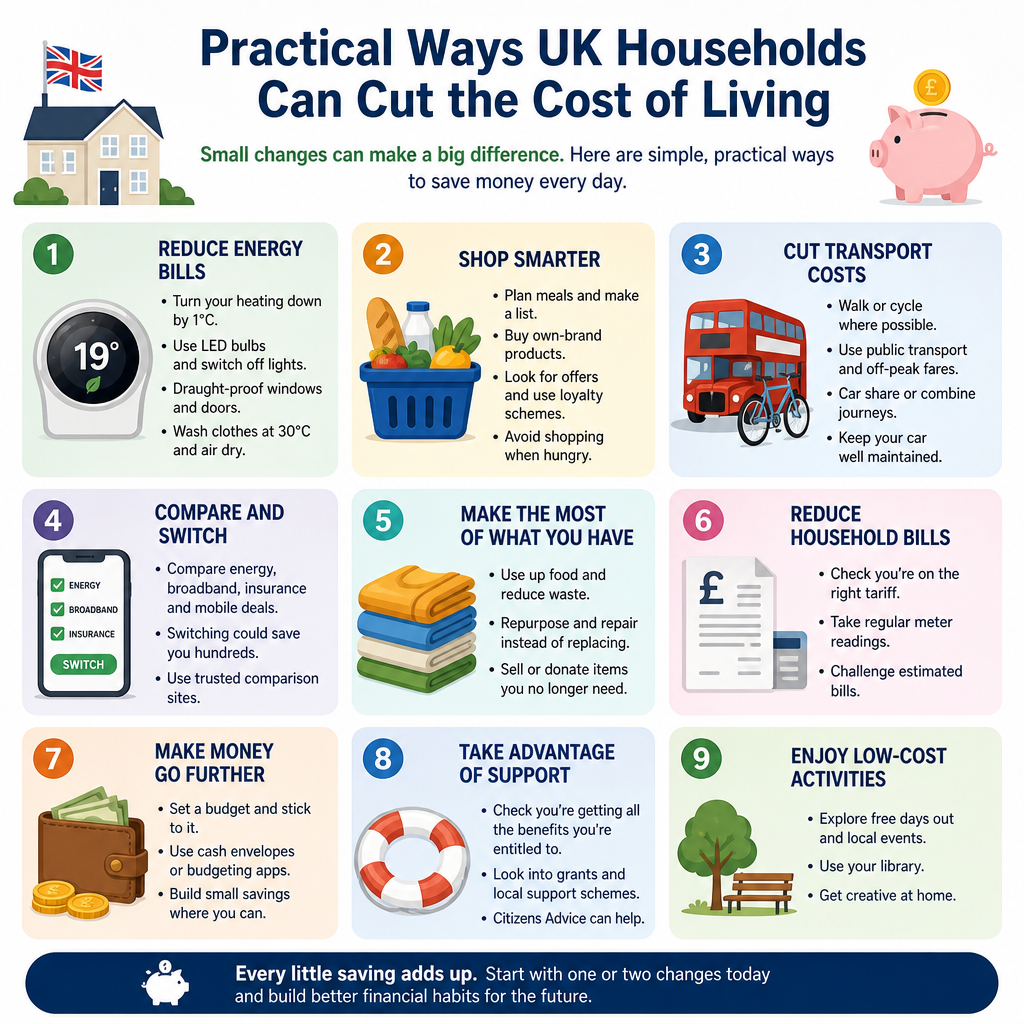
If it feels like your money disappears faster than it used to, you are not imagining it. From energy and food to phone bills and rent, prices across the UK have crept up, and most households are feeling the squeeze. The tricky part is that it is rarely one huge bill that causes the stress, it is the steady drip of regular expenses.
The good news is that this also works in your favour. You do not need to live on beans on toast, give up every treat or never have a day out again. Small, sensible changes to the way you spend can easily add up to hundreds of pounds over a year. Think shaving £5 a week off your food shop, trimming £10 a month from subscriptions and cutting £15 from bills. On their own they sound tiny. Together, they matter.
A smart way to start is to focus on the big areas first, the ones that swallow most of your income: housing, energy, food, travel and debt. Getting a better deal on your energy or mortgage, or tightening up your food shop, can have a bigger impact than endlessly agonising over the odd coffee.
Once those larger wins are in hand, then it is worth looking at smaller savings, like unused subscriptions or everyday habits.
This guide is here to help you do exactly that, step by step. It is practical, friendly and based on what real households can actually stick to. No guilt, no perfectionism, just realistic actions that give you back a bit more control over your money. Household Budget Basics for Rising UK Bills and Costs
Know where your money goes: simple budgeting that actually works
The first step is simply knowing where your money actually goes. Set aside 20 minutes for a quick money audit. Write down your monthly income, then list your main outgoings: rent or mortgage, council tax, energy, water, phone and broadband, food, travel, childcare and any debts.
Next, track what you spend for one month. You can use your bank’s app, a free budgeting app, or a basic spreadsheet. Many UK banking apps now sort spending into categories, which makes it easier to spot patterns like “how did I spend £120 on takeaways?”
To make sense of it all, try the 3 bucket idea:
- Essentials: housing, bills, basic food, travel to work or school, minimum debt payments.
- Nice to haves: eating out, subscriptions, holidays, hobbies, treats.
- Could cut: things you pay for but barely use or do not really value.
Look closely at subscriptions in the last two buckets. Streaming services, gyms, apps, box schemes. Cancel what you do not use, or try downgrading to a cheaper plan. When you go to cancel, many companies offer discounts or a pause option, which can still save money.
Set one or two clear goals, for example “£300 emergency fund” or “clear the credit card by next June”. Having a purpose makes it easier to say no to random spending.
You do not need to budget every day. A simple review every three months, checking your buckets and trimming anything new that has crept in, is enough to keep things on track without feeling restricted. Charity shops are another way to reduce outgoings.
Energy and household bills: lowering costs without feeling cold
Energy bills are one of the biggest worries for UK households, especially when the heating goes on. You cannot control unit prices, but you can control how much you use and what you pay for it.
Start with your bill. Check:
- Your tariff name and if it is fixed or variable
- The unit rate (per kWh) and standing charge
- Whether the readings are “E” (estimated) or “A” (actual)
Submitting regular meter readings, or using a smart meter, helps avoid overestimated bills and nasty catch up payments.
It is worth checking tariffs for gas, electricity, broadband and mobile a couple of times a year. Use well known comparison and cashback sites, and always check contract end dates and any early exit fees. Sometimes a slightly higher tariff with no exit fee gives you more flexibility if prices fall. Save On Your Electricity Bill By Using A Power Station
Low effort energy savers can make a real difference: lower your boiler flow temperature, use thermostatic radiator valves to avoid heating unused rooms, block draughts, and close doors and curtains at night to keep warmth in. With appliances, use eco settings, avoid leaving things on standby where practical, wash at 30 degrees and air dry clothes when you can. A simple thing like using a Thermos Flask can actually reduce your annual costs too.
If you are struggling, check GOV.UK for schemes like the Warm Home Discount, Winter Fuel Payment, cost of living payments and any extra help from your supplier’s hardship fund.
Water savings do not have to feel harsh. Take slightly shorter showers, fix dripping taps and toilets, and ask your water company if they offer free water saving devices like efficient shower heads or cistern bags. Over a year, the savings quietly add up. Smart Plugs and Simple Timers To Save Money
Food and groceries: cutting the bill without cutting quality
Food is one of the easiest areas to overspend, but it is also one of the quickest to fix without feeling deprived. A few small changes to how you shop and cook can knock a surprising amount off your monthly bill.
Start by planning just 3 to 5 main meals a week. Check your cupboards, fridge and freezer first, then build meals around what you already have. This cuts waste and means you buy fewer “extra” ingredients.
For basics like pasta, rice, tinned tomatoes, beans, cereals and cleaning products, try supermarket own brand or value ranges. Many are made in the same factories as branded goods. Test a couple of swaps each week and keep the ones your household is happy with.
Go shopping with a list and a rough spend limit. Avoid shopping when you are hungry and be wary of end of aisle deals and impulse buys at the till. Sticking to what is on your list is one of the simplest ways to control costs. Too Good to be True App Get Cheap Food
Cooking in batches can save both time and money. Make extra portions of sauces, soups, curries or casseroles and freeze them. Future you will thank you on busy evenings.
Use supermarket loyalty cards and apps to get personalised offers, digital coupons and track prices. Check reduced to clear shelves and yellow sticker sections, especially for meat and bread you can freeze.
Finally, cut food waste by storing food properly, using leftovers for lunches or “use up” meals, and checking use by and best before dates so you eat things in time. Less food in the bin means more money in your pocket. How to Save Money on Groceries
Housing and rent or mortgage: making your biggest cost more manageable
Housing is usually the biggest monthly cost, and it is not something you can change overnight. You might not be able to move or remortgage quickly, but there are still realistic ways to take the pressure down.
If you rent, check when your tenancy ends and what notice you must give. Before renewal, look at similar properties on sites like Rightmove, Zoopla or local Facebook groups so you know what is fair. Gather proof you are a good tenant, such as on time payments and good communication. Use this to ask for a smaller increase, a freeze for 6 or 12 months or a small reduction. Even £20 to £50 a month helps over a year.
Know your rights where you live. Rules differ in England, Scotland, Wales and Northern Ireland, especially around deposits, repairs and rent rises. Reliable information is on sites like Citizens Advice, Shelter, GOV.UK and the relevant government pages in Scotland, Wales and Northern Ireland.
If you own your home, see whether a new deal or product transfer could lower payments, especially as fixed rates end. Always speak to a qualified mortgage adviser before changing anything so you understand fees, risks and how long terms run.
To cut housing related costs, you could take in a lodger if it is legal under your mortgage or tenancy, or share more bills with housemates or family.
If you are struggling, contact your landlord or lender early. Free debt advice charities can help, and you may qualify for Support for Mortgage Interest or Local Housing Allowance.
Travel, commuting and cars: moving around for less
Travel costs are another big drain, especially if you commute or ferry kids around. Between fuel, insurance, tax, parking and tickets, it all adds up quietly each month.
Start by asking whether every car journey is really needed. Could you combine errands into one round trip, share lifts with colleagues, or use the train or bus when it works out cheaper once you factor in parking and congestion charges?
For short local trips, walking or cycling can save a surprising amount over a year, and you get the bonus of fresh air and exercise. Even swapping just one or two weekly drives for a walk can cut fuel use and wear on your car.
If you do drive regularly, a few habits can lower fuel costs. Accelerate gently, keep tyres at the correct pressure, avoid carrying unnecessary clutter in the boot and remove roof racks or boxes when you are not using them. Try not to leave the engine idling for long periods.
Look at your car costs once a year. Shop around for insurance at renewal, and if you can afford to pay annually it is usually cheaper than monthly instalments. Check your estimated mileage and optional extras, you might be paying for more cover than you need.
For public transport, explore railcards, season tickets, bus passes and off peak fares. Journey planner apps can compare routes and flag cheaper options.
It is also worth checking if your employer offers help, such as cycle to work schemes, season ticket loans or car share incentives. These can quietly trim regular travel costs without major lifestyle changes.
Debt, savings and support: protecting your household from shocks
Debt often feels stressful, but tackling it is one of the strongest ways to ease day to day money pressure. Ignoring letters or missed payments usually makes things worse, with extra fees and damage to your credit record.
It helps to know which debts matter most. Priority debts are the ones that can affect your home, essential services or freedom if they are not paid. These include rent and mortgage, council tax, energy bills, TV licence, court fines and some tax debts. Non priority debts are things like credit cards, store cards, personal loans, overdrafts and buy now, pay later. They still matter, but if money is tight, you deal with priority debts first.
If you are struggling, contact creditors as early as possible. Explain your situation, offer what you can afford and ask about payment plans, freezing interest or temporary breathing space.
You do not have to do this alone. Free, trusted UK charities, such as StepChange, National Debtline and Citizens Advice, can help you build a realistic budget and talk to creditors on your behalf. Avoid firms that charge high fees to “fix” debt.
Alongside sorting debts, aim for a small emergency fund, even £5 to £20 a week. Over time, this can cover things like car repairs or a broken appliance so you do not need new credit.
Finally, check your tax code, make sure you claim any benefits or tax credits you are entitled to, and use reputable UK benefits calculators online. Asking for help is a sign of strength, not failure, and many households are in the same boat right now.
Putting it all together: your personal cost of living action plan
No one household can control energy prices, food inflation or interest rates, but you can control how you respond to them. Small, steady changes to how you spend, shop, cook and travel can soften the impact over time and give you more breathing space. Switching Costs Explained
To keep things manageable, choose just three actions from this guide to do in the next week. For example, you might:
- switch one tariff or at least run a comparison
- cancel or downgrade one subscription
- plan five dinners using what you already have at home
Write them down, do them, then forget perfection and carry on with your week.
After a month, check in with yourself. Look at your bank balance, but also at your stress levels. Is there a bit more left in your account before payday, or a little less money worry in the back of your mind? Use what you learn to pick the next one or two actions.
New habits take time. You will have weeks where you overspend or plans go out the window. That is normal. The aim is progress, not a perfect budget. Save on Unlimited SIM-Only Cards
If you find a trick that works for you, share it with friends, family or online communities. Collective ideas and encouragement help everyone.
The clear takeaway: every pound you keep in your pocket is a step towards more security and comfort. You have more control than it sometimes feels, and you can build that control one small, practical change at a time. Top 10 Cost of Living & Money Saving Books