Making your first £500 on eBay is less about luck and more about knowing what to sell, how to present it, and how to keep the momentum going. Most homes are full of unused items that quietly lose value in cupboards, lofts and garages. Turned into listings, those same items can become a tidy lump sum that pays a bill, boosts your savings, or funds a personal goal.
Think of eBay not as a mysterious marketplace but as an online car boot sale with better tools and a much wider audience. Anyone can start, and you don’t need specialist knowledge to get early wins. What you do need is a simple, repeatable process: choose the right items, price and photograph them well, then ship reliably and reinvest in what works.
This guide walks you through exactly that process. You’ll learn how to spot “hidden money” around your home, how to create listings that actually attract buyers, and how to post items efficiently so you’re not overwhelmed. Follow these steps and that first £500 becomes a realistic, near-term target rather than a vague idea.
Turn Clutter into Cash: Your First £500 on eBay
Start in the places where forgotten value hides: wardrobes, lofts, spare rooms, kids’ rooms, garages and under-bed storage. Look for clothes in good condition, unused gifts, gadgets you’ve upgraded from, books you won’t read again, toys your kids have outgrown, and hobby gear you’ve abandoned. Focus on items that are branded, still functional, and easy to post. You’re not trying to clear everything yet—just enough quality items to realistically hit that £500 mark.
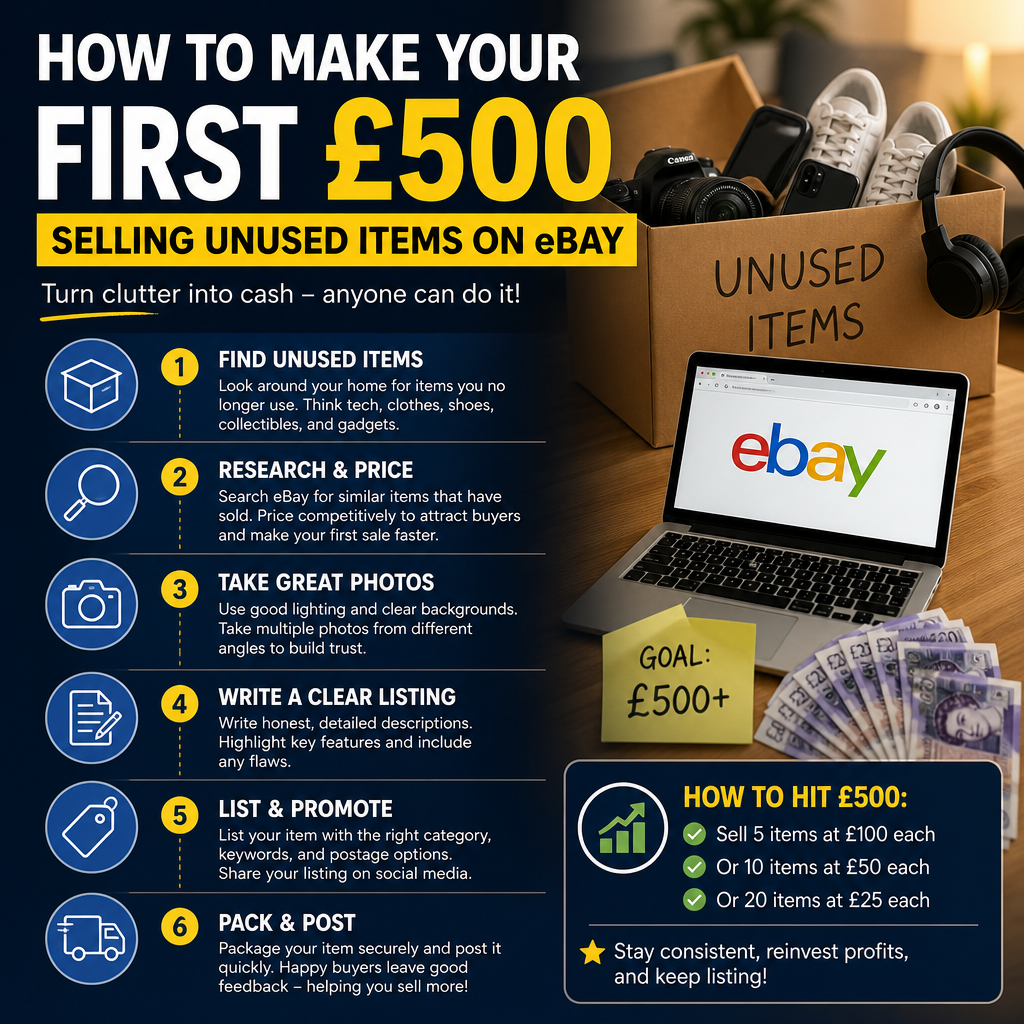
To get a sense of what your clutter might be worth, use eBay’s “Sold items” filter. Search for your item (or something similar), then tick “Sold items” on the left-hand side. This shows you what things have actually sold for, not just what people are hoping to get. You’ll quickly see patterns: certain brands, conditions and bundle types (like job lots of books or clothes) tend to move faster and for better prices. Use this research to shortlist your most promising items.
Set a simple initial goal: identify 20–40 items with realistic individual values of £10–£50. That mix alone can get you close to or beyond £500 if you choose well. For lower-value things, consider bundling—multiple paperbacks as a set, baby clothes in age ranges, or console games by genre. This not only increases the total price per listing but also cuts the time you spend creating dozens of separate listings for small amounts of money.
Choosing, Pricing and Listing Items that Sell Fast
Before listing, clean items and check them carefully. For clothes, remove lint, steam or iron if needed, and photograph them flat or on a hanger against a plain background. For electronics, factory reset where appropriate, test cables and accessories, and be honest about any dents or marks. Items that appear well cared for naturally attract more buyers and reduce the chance of returns or complaints. A bit of prep can easily add a few extra pounds to the final price.
Pricing is where many new sellers either sabotage themselves or stall. Use your “Sold items” research to find a realistic range, then decide on strategy. For in-demand, branded items in good condition, a 7-day auction starting slightly below the average sold price can create bidding interest. For slower or niche items, or where you want predictable income, use “Buy It Now” with a price near the upper end of the typical sold range and turn on “Best Offer” so buyers can negotiate. You can always adjust after a week if there’s no interest.
Your listing needs three core elements: clear photos, a searchable title, and a straightforward description. Take multiple photos in good daylight from different angles, including labels, model numbers, and any flaws. In the title, use key details a buyer would type: brand, item type, size or capacity, colour, and condition (e.g. “Nike Air Max 90 UK 9 Men’s Trainers White Grey – Very Good Condition”). In the description, be brief but precise: state condition honestly, mention any defects, include measurements where relevant, and confirm what’s included. Clear, accurate listings build trust and help items sell faster.
Pack, Post and Grow: Reinvest for Ongoing Profits
Once sales start coming in, your reputation becomes a real asset. Pack items securely: use bubble wrap or scrunched paper, sturdy boxes or padded envelopes, and tape seams properly. For anything remotely fragile, over-protect rather than under-protect; a single broken item ruins profit and risks a negative review. Print labels via eBay when possible—this can be cheaper and automatically updates tracking for buyers. Always upload tracking for higher-value items for your own protection.
Set a regular posting routine so buyers aren’t left waiting. Commit to shipping, for example, on Monday, Wednesday and Friday, and state this handling time clearly in your listings. Drop parcels at your chosen courier or Post Office on schedule and mark items as dispatched within eBay. Fast and reliable dispatch times often lead to positive feedback, which in turn boosts your visibility in search results and makes future buyers more comfortable paying a bit more for your items.
As the first batch of items sells and you approach that £500, treat it as proof of concept. Look at what sold quickest and for the best margins—brand names, categories, or item types—and consider reinvesting a portion of your profits into more stock. This might mean picking up underpriced items at car boot sales, charity shops or local marketplace listings that you know can sell for more on eBay. Gradually, you move from just decluttering to running a small, repeatable side business, using that first £500 as the foundation.
Your first £500 on eBay is simply a matter of turning neglected possessions into well-presented listings and backing them up with reliable service. By focusing on items with proven demand, pricing based on real sold data, and packing and posting with care, you build both income and a solid seller reputation. The learning curve is short, and each sale teaches you a little more about what the market wants.
Most importantly, this isn’t a one-off trick. Once you’ve seen what works in your own home, you can repeat the process with purpose-bought stock, scaling at a pace that suits you. Whether you stop after that first £500 or turn it into a steady side hustle, you’ll have gained practical skills in online selling, buyer psychology and basic business management.
If you’re ready to start, pick one room, find five items, research their sold prices, and get them listed today. Those first few sales are often the hardest step—and once they arrive, that £500 target starts to look comfortably within reach.