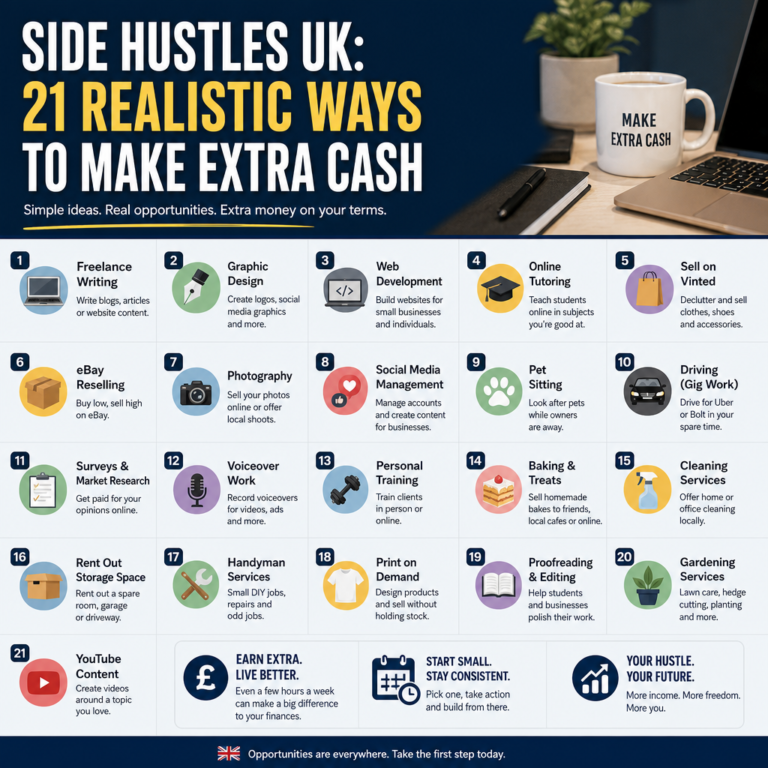
Side hustles have become a normal part of life in the UK, whether you’re selling handmade crafts online, tutoring after work, freelancing at weekends, or doing the occasional bit of consulting. Alongside the extra income comes a big question: how does HMRC treat this money, and when do you need to tell the taxman about it? That’s where the UK’s £1,000 trading allowance comes in – a small but powerful piece of tax law that can make side-hustle admin much simpler.
In simple terms, the trading allowance can mean that some people with modest side income don’t have to register for Self Assessment or pay tax on that money at all. But like most things tax-related, the details matter. Using the allowance in the wrong way, or assuming it covers everything you earn on the side, could land you in trouble – or at the very least, paying more tax than you need to.
This article breaks down how the £1,000 trading allowance actually works in real life, and who can benefit from it. We’ll look at when you’re safely under the radar, when you must still declare your income, and how to decide whether to use the allowance or claim actual expenses instead.
How the £1,000 Trading Allowance Works in Practice
The trading allowance is a tax-free amount of up to £1,000 per tax year (6 April to 5 April) that you can set against income from “trading” or casual services. This includes things like selling items you’ve made, running a small online shop, offering freelance services, or doing gigs and casual work outside your main job. If your total gross income from all these activities in a tax year is £1,000 or less, you generally don’t need to register for Self Assessment or pay income tax on that side income. It’s treated as covered by the allowance.
However, the allowance applies to income, not profit. “Gross income” means everything you bring in before taking off any costs or expenses. So if you made £1,200 from your side hustle and spent £400 on materials and fees, your profit might only be £800 – but for the trading allowance test, HMRC looks at the £1,200. That means your income is above £1,000, so the simple “do nothing” treatment no longer automatically applies, even though your actual profit is under that amount.
Once your side income is above £1,000, you have a choice. You can either use the trading allowance as a flat £1,000 deduction from your trading income, or ignore the allowance and instead deduct your actual allowable expenses. You can’t do both. In practice, if your real expenses are less than £1,000, the allowance usually gives you a better result. If your real expenses are more than £1,000, claiming them instead of the allowance should reduce your taxable profit more. This choice is made through your Self Assessment tax return each year.
Who Qualifies and When You Still Need to Declare
Most individuals with small-scale trading or casual income can benefit from the trading allowance: employees with a side gig, students doing bits of freelance work, retirees selling handmade items, and so on. It doesn’t matter whether you already pay tax through PAYE on your main job – the allowance is separate and specifically aimed at small amounts of trading and “miscellaneous” income. There’s also a separate £1,000 property allowance for very small amounts of rental or property-related income, but that’s distinct from the trading allowance and has its own rules.
There are some important limits. If you’re already registered as self-employed with HMRC and running a business, you can still use the trading allowance, but it may work differently depending on how your income is structured. If your self-employed business is your main trade and you keep full accounts and expenses, you’ll usually choose between using the allowance or actual expenses for that trade. In addition, if you have more than one small side hustle (for example, selling on Etsy and doing freelance design), the allowance covers the total of that trading income combined – it is not £1,000 per activity.
Even if your income is under £1,000, there are times you might still need or want to declare it. You must register and file a Self Assessment return if HMRC asks you to, if you’re required to file for other reasons (for example, high income, complex tax affairs, or certain types of investment or property income), or if you want to pay voluntary Class 2 National Insurance to protect your state pension record. You might also choose to register if your expenses are high and you’d like to show a loss that can potentially be carried forward against future profits. In short, the £1,000 trading allowance can keep the taxman at arm’s length for very small ventures, but it doesn’t remove your responsibility to check whether a declaration is still needed in your particular situation.
The £1,000 trading allowance is designed to make life easier for people earning modest amounts from side hustles and casual work, but it isn’t a blanket “tax-free” pass for everything you do on the side. The key is to track your income, understand that the £1,000 limit is based on gross receipts, and then decide whether the allowance or actual expenses give you the better outcome once you cross that threshold.
If your side earnings stay under £1,000 a year, you’ll often find that things are straightforward: no tax, no registration, and no need to wrestle with a tax return just for your small venture. As your side hustle grows, though, you move into territory where a Self Assessment return becomes essential and your choices about the allowance start to affect how much tax you pay.
Taking a little time to understand how the trading allowance works can save you both money and stress. Keep simple records of what you earn and what you spend, check HMRC’s latest guidance each tax year, and if you’re unsure, consider speaking to a qualified tax adviser. That way, you can grow your side hustle with confidence – and stay on the right side of the taxman.