Cutting your electricity bill doesn’t always require big renovations or expensive solar panels. Sometimes, the quickest savings come from tackling the small, everyday devices quietly drawing power around the clock. Smart plugs and simple timers are low-cost tools that give you control over when your gadgets use electricity and when they don’t. Used thoughtfully, they can chip away at hidden energy waste and lower your monthly bills without sacrificing comfort or convenience.
Think about all the gear plugged in at home: TVs, game consoles, coffee makers, chargers, routers, and more. Many of them sip electricity 24/7, even when “off,” adding up to a surprising chunk of your usage. Smart plugs and timers act like gatekeepers between the wall socket and your devices, deciding exactly when power should flow. By reclaiming that control, you can cut standby power, avoid unnecessary daytime use, and shift some loads to cheaper off-peak hours. eBay have a number of suitable timers to choose from.
This article walks through how smart plugs help reveal and reduce waste, how plain plug-in timers still earn their keep, and why combining both approaches can magnify your savings. You’ll see practical examples for everyday appliances, learn how to avoid common pitfalls, and discover a few simple rules-of-thumb to decide what belongs on a smart plug or timer—and what doesn’t.
Cut Hidden Energy Waste With Smart Plugs
Smart plugs are small adapters that sit between your outlet and device, connecting to your Wi‑Fi and a smartphone app. At their simplest, they let you turn things on and off remotely, but the real value is in scheduling and energy monitoring. Many models show how much power a plugged-in device uses over time, revealing which “harmless” gadgets are actually draining your wallet when idle. Once you see the numbers, it’s much easier to decide what should stay plugged in around the clock and what should be controlled.
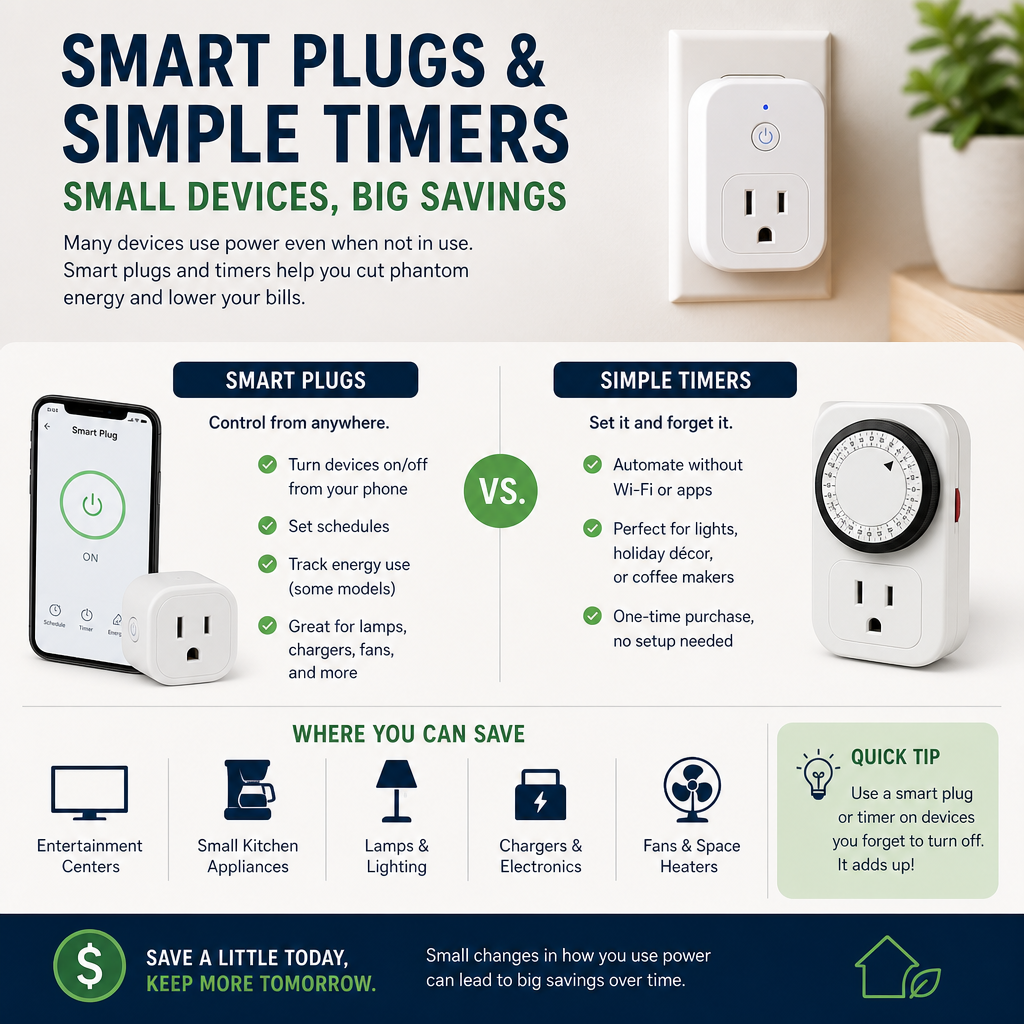
These plugs shine when used with devices that don’t need constant power but are often left on: space heaters, dehumidifiers, decorative lighting, office equipment, and entertainment gear. For instance, you can schedule a smart plug to cut power to your TV, soundbar, and streaming box every night at midnight and turn them back on before you wake. You still get instant access when you need it, but you’re not feeding them electricity all night just for standby lights and quick-start modes.
Voice and app control make smart plugs convenient enough that you’ll actually keep using them. You can say “turn off the office” to shut down monitors, speakers, and a printer plugged into a power strip controlled by one smart plug. Some plugs also integrate with routines and scenes—like automatically shutting off non-essential electronics when you leave home, or turning off a portable heater if a room reaches a set temperature. The more you automate this behavior, the more savings you lock in without having to remember anything day to day.
Simple Timers That Slash Standby Power Costs
While smart plugs grab the headlines, basic mechanical or digital timers are still powerful tools for trimming energy use. A plug-in timer lets you set specific on/off times using either little plastic tabs (on mechanical models) or a digital display. Once set, it quietly runs the same schedule every day, no Wi‑Fi or app required. They’re inexpensive, reliable, and perfect when you have a predictable routine or a device that only needs power during certain hours.
💡 Smart Money Tip: In the winter, we heat our bedroom with a small oil heater turned down low all night from midnight to 9am. However, instead of leaving the heater on constantly for 9 hours, we use the timer to bring the heater on 20 minutes, off 20 minutes, on 20 minutes, etc. You don’t feel any difference in the heat as the oil heater still gives out heat when off for a while, but it means saving over 3 hours electricity per night! Multiply that up for your 3 months bill and that is a significant saving!
Timers work especially well for equipment with obvious “on” windows: outdoor or holiday lighting, aquarium pumps and lights, electric towel warmers, coffee machines with warming plates, and some fans or air purifiers. Instead of accidentally running your patio lights until dawn, a timer ensures they shut off at 11 p.m. every night. That alone can cut lighting costs in half or more, particularly with older bulbs or high-wattage decorations. For appliances that don’t need to run 24/7, timers prevent them from quietly burning kilowatt-hours all night or while you’re at work.
Because simple timers don’t depend on apps, clouds, or accounts, they’re set-and-forget solutions. Once dialed in, they just keep working, even through router glitches or phone upgrades. This makes them ideal for households that want to save money without adding more tech complexity. For reliability, look for timers with a built-in battery backup (for digital models) to remember schedules during power outages, and always match the timer’s rated load to what you’re plugging in—especially with heaters or other high-wattage devices.
Combining Smart Control and Timing to Save
You don’t have to choose between smart plugs and basic timers; using both can give you broader coverage and better savings. A good rule is to assign “brainy” tasks—like reacting to occupancy, temperature, or changing routines—to smart plugs, and hand fixed, repetitive schedules to plain timers. Outdoor lights on at sunset and off at midnight? A timer can handle that cheaply. Office gear that should shut off when you leave but sometimes needs to stay on late? That’s a smart-plug job, reacting to your presence or phone location.
Combining both tools helps you attack standby power from multiple angles. For example, a timer can cut power to a group of devices every night from midnight to 6 a.m., guaranteeing nothing in that circuit runs while you sleep. Meanwhile, smart plugs on specific high-draw items—like a portable AC, dehumidifier, or space heater—can respond to weather, occupancy, or energy prices. When you layer these controls, you shrink the hours your devices are allowed to consume power and make sure those hours actually align with when you benefit from them.
Over time, this approach turns into a quiet, background system that keeps shaving waste without constant adjustment. Start by listing gadgets that don’t truly need to be on 24/7: entertainment systems, office electronics, secondary fridges or freezers, decorative or security lighting, and comfort devices like heaters and fans. Decide which need flexible, app-based control and which simply follow a daily rhythm. Then deploy a mix of smart plugs and timers accordingly. With a weekend of setup, you can bake in savings that recur every month, with almost no ongoing effort.
Smart plugs and simple timers won’t eliminate your electric bill, but they can reliably trim off the waste you never meant to pay for in the first place. By cutting standby power, tightening the hours your devices are allowed to run, and shifting some usage to the times you actually need it, these small tools deliver steady, compounding savings. The key is matching the right kind of control—smart or simple—to each device and routine, then letting automation handle the rest. Once put in place, your home quietly becomes leaner, cheaper to run, and a bit more thoughtful about every watt it uses.