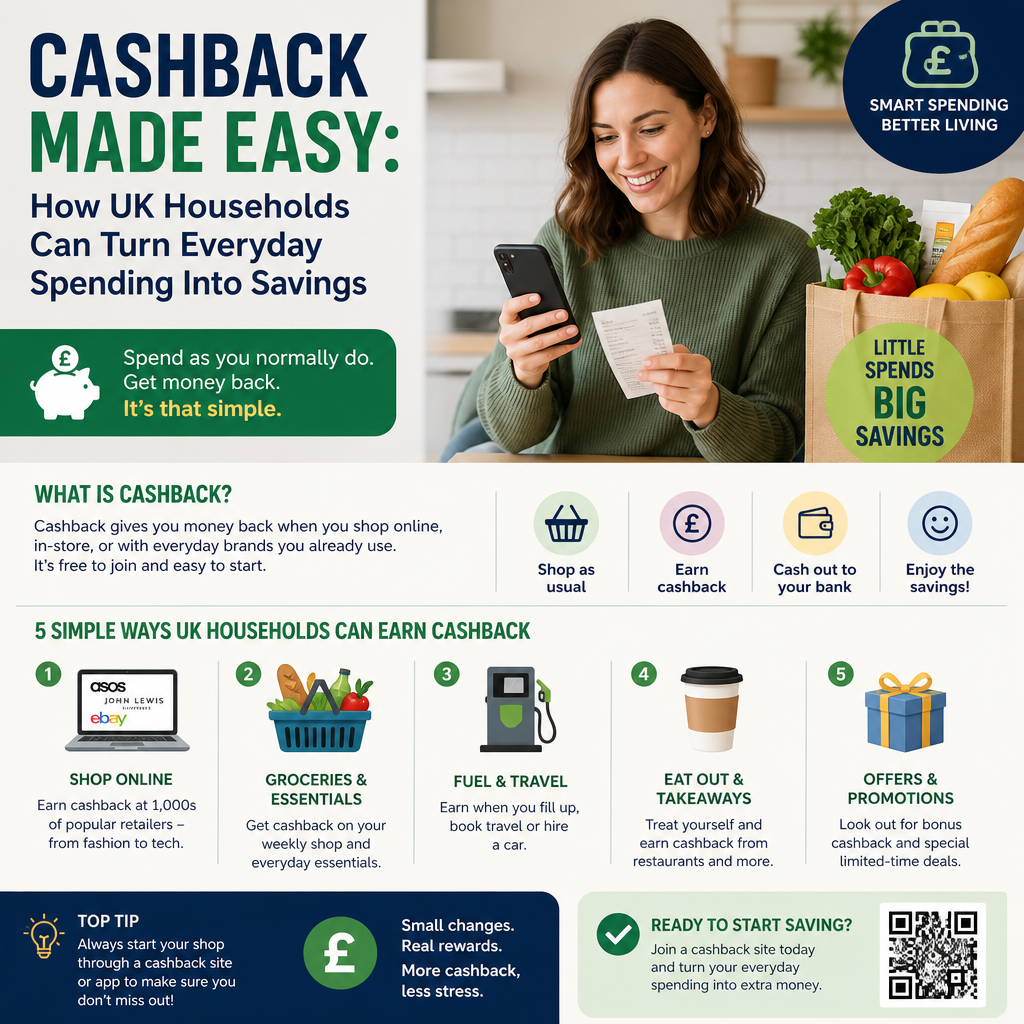
If every supermarket shop, petrol fill up and online order felt a bit painful last year, you are not alone. Food, energy and travel costs have all crept up, and for many UK households there is not much left to cut.
That is where cashback comes in. It will not magically fix the cost of living, but it can quietly chip away at what you pay. Think of it as a background money saver, sitting alongside your usual tactics like switching providers, using loyalty cards, meal planning and cutting waste.
Cashback is simple. You buy something you were going to buy anyway, and a small percentage of that spend is returned to you. This might be through a cashback website you click through before shopping, a card or app that pays you back automatically, or a gift card bought at a discount. Over a month or two the amounts can feel tiny, but over a year they add up to real money.
It is important to keep expectations realistic. Cashback will not cover your gas bill or your weekly shop on its own, and it should never be a reason to spend more. The power is in using it on normal, necessary spending.
The good news is that many of the best cashback tools are free to join and easy to use with a smartphone or laptop. Once you are set up, most of the work is a few extra taps before you buy. With a bit of routine, you can turn everyday spending into a steady trickle of savings.
Cashback Basics: How It Works and What to Watch Out For
Cashback usually starts with a simple step: instead of going straight to a retailer, you begin on a cashback site or app. You search for the shop you want, click through from the cashback platform, then complete your purchase as normal. The retailer tells the cashback site that you have bought something, and a slice of what you spent is shared back with you.
You will see a few key stages. First, the purchase is “tracked”, which means the system has noticed your visit and linked it to your account. Next it sits as “pending” while the retailer checks the order and waits out any return period. Finally it becomes “confirmed” or “payable”, at which point you can usually withdraw it to your bank, PayPal, or as vouchers. Payouts can be quick for things like takeaways or small online orders, but big purchases such as insurance or travel can take several weeks or even a few months.
Terms and conditions really matter. Watch for minimum spend rules, items that do not qualify, “new customer only” deals, and caps on how much you can earn. If you break the rules, you might not get anything.
The biggest trap is spending more than you planned just to “earn” cashback. A 10 percent reward on something you did not actually need is still wasted money. The best results come when you stick to your budget and use cashback only on things you would have bought anyway.
TopCashback and Other Major Cashback Websites
TopCashback is one of the biggest UK cashback websites, with thousands of retailers covering travel, utilities, insurance, fashion, groceries and more. The idea is simple, and free to use. You create an account with your email, set a password, then log in whenever you are about to shop online.
Before you buy, search for the retailer on TopCashback. Check the cashback rate and any special terms, then click through from TopCashback to the retailer’s site. Shop as normal and pay as you usually would. Your visit is tracked, the retailer confirms the purchase after a set period, and the cashback appears in your account, ready to withdraw to your bank, PayPal or as gift cards.
Cashback sites really come into their own with bigger switches, such as broadband, car or home insurance and mobile contracts. These can pay chunky one off rewards on top of any discounted tariffs or introductory offers, which can make a real dent in annual bills.
Other popular UK sites include Quidco and Airtime Rewards. Many retailers appear on more than one platform, sometimes at different rates. To keep life simple, most households are better off choosing one or two main sites and using them consistently, rather than spreading purchases across lots of accounts.
To help your cashback track properly, turn off ad blockers on cashback sites, clear your cookies before big purchases, and avoid hopping between comparison sites, voucher code pages and different cashback sites midway through checkout. Once you click through, go straight to paying.
Card Based Rewards: Zilch, SuitsMeCard and Everyday Spending
Card based rewards tie your cashback directly to the way you pay. Instead of clicking through a website, you use a specific debit card, credit card or virtual card, and earn money back automatically at participating retailers.
Zilch is one of the better known options. It works as a virtual card you add to your digital wallet. When you shop through Zilch with partnered retailers, you can earn instant cashback or rewards. If you want to keep things simple and avoid extra costs, stick to Zilch’s debit mode, where you pay in full at the time of purchase. That way you are not using it as credit, which can bring fees and the risk of slipping into buy now pay later debt.
SuitsMe works differently. It is an e money account with a debit card, aimed at people who may not qualify for, or want, a traditional bank current account. Certain retailers pay you cashback when you use your SuitsMe card, which can be particularly handy for everyday shopping if you are already using it as your main account.
With any card based reward, the rules are the same. Never spend extra just to earn cashback. Pay off any credit card or BNPL style balances in full and on time. Keep your usual budget front and centre.
Before signing up for new products, check what you already have. Many UK bank accounts, building societies and credit cards offer their own cashback or retailer offers, which you can activate in your existing app without opening anything new.
Gift Card and Voucher Cashback: JamDoughnut, Tuck and Similar Apps
Gift card and voucher apps are a clever way to earn cashback on money you were going to spend anyway. Instead of paying a supermarket or petrol station directly with your card, you first buy a digital gift card in an app, earn cashback on that purchase, then use the gift card to pay at the till or online.
JamDoughnut is one of the best known UK options. You choose a retailer in the app, buy a digital gift card for that shop, then get instant cashback credited to your JamDoughnut balance. You can withdraw that cashback to your bank once you hit the minimum, or use it towards your next gift card. Retailers include big supermarkets (Tesco, Sainsburys, etc.), fuel, restaurants, clothing and more.
Tuck and similar apps work in much the same way. The big attraction is that the cashback rates are often higher than what you would get from a standard debit or credit card, especially on groceries and everyday chains. Used well, they can shave a few percent off a big chunk of your monthly spending.
A simple example. You plan to spend £80 on your weekly supermarket shop. Before you go, you buy an £80 supermarket gift card through JamDoughnut or Tuck, earn a few pounds cashback instantly, then pay for your shop with the gift card at checkout.
The key risk is overloading gift cards. Only buy what you know you will use in the next week or two, and keep a note of balances and expiry dates. Otherwise, unused or forgotten gift cards can wipe out the savings.
Savings and Prize Apps: EverUp and Other Gamified Cashback Tools
Savings and prize apps sit somewhere between cashback and a lottery. One example is EverUp, which rewards you for everyday spending, saving or using its linked card. Instead of straightforward interest, you usually earn coins or entries into prize draws, scratchcards or mini games. If you get lucky, the payouts can feel exciting, and the gaming style can make saving feel less of a chore.
There is a big difference compared with a normal savings account though. With prize linked apps your “return” is not guaranteed. Some people will win, others will not, and you may end up earning less than you would have with a basic easy access account.
Treat EverUp and similar tools as a fun extra, not the foundation of your finances. A few safe rules help:
- Keep your emergency fund and bill money in straightforward, FSCS protected savings or current accounts.
- Only move across an amount you are comfortable experimenting with.
- Think of any prizes as a bonus on top of proper interest and cashback, not a replacement.
Before committing, compare. Look at what you could earn from a high interest savings account or a regular cashback card, then weigh that against the likely rewards from a prize app. If the maths works and you enjoy the gamified element, they can sit alongside your existing accounts, giving you another small way to squeeze value from money you were planning to spend or save anyway.
Simple Rules to Maximise Cashback Without Overspending
7. Simple rules to maximise cashback without overspending
Think of cashback as part of your normal routine rather than a separate hobby. Before any large online purchase, open your chosen cashback site or app, search for the retailer, and click through from there. In shops, use your reward debit or credit card as standard, and for regular costs like groceries or fuel, consider buying pre planned gift cards through apps if they offer better cashback.
A simple way to stay in control is to start with your budget, not the offers. Once a month, list your expected spending on food, fuel, online shopping and bills. Then match each category with the best cashback option you already have, such as a cashback website for insurance, a gift card app for the supermarket, and a bank card with rewards for everything else.
Where the terms allow it, you can “stack” offers. For example, click through a cashback site, pay with a cashback card, and use a discounted or cashback earning gift card. Always check rules first, so you do not accidentally break conditions and lose the reward.
Keep motivation up by tracking your earnings. A simple spreadsheet or notes app showing date, retailer, amount spent and cashback received can be enough to see the totals grow over time.
Finally, protect yourself. Enable two factor authentication on cashback and banking apps, ignore emails asking you to click links or share passwords, and always sign in by typing the official website address or opening the official app directly.
Bringing It All Together: Build Your Own Cashback Habit
Cashback works best when it becomes a quiet habit, not a big project you only think about now and again.
You have a toolkit to choose from. Cashback websites like TopCashback can pay you for online shopping and big switches such as broadband or insurance. Card based rewards like Zilch and Suits Me can give automatic cashback when you tap to pay. Gift card apps such as JamDoughnut and Tuck let you earn extra on groceries, fuel and days out. Prize style apps like EverUp add a bit of fun, with rewards and draws on top of normal saving and spending.
The golden rule is simple: stick to things you already buy. Cashback should trim the cost of everyday life, not encourage impulse treats or new subscriptions.
For the next month, keep it easy. Choose one cashback website and one app. Link them to shops and bills you already use, for example your supermarket, fuel, mobile or streaming. Before each planned purchase, spend thirty seconds checking whether you can click through the site or buy a gift card first. At the end of the month, tot up what you have earned and decide whether to add another tool.
Talk about it at home too. Sharing tips with family, housemates or friends can help everyone avoid mistakes and find the best deals, especially on big switches like broadband or insurance.
The clear takeaway: small percentages really do add up. With a few simple habits, you can turn everyday spending into a steady stream of savings and stretch every pound that bit further. Get a quick £20 today