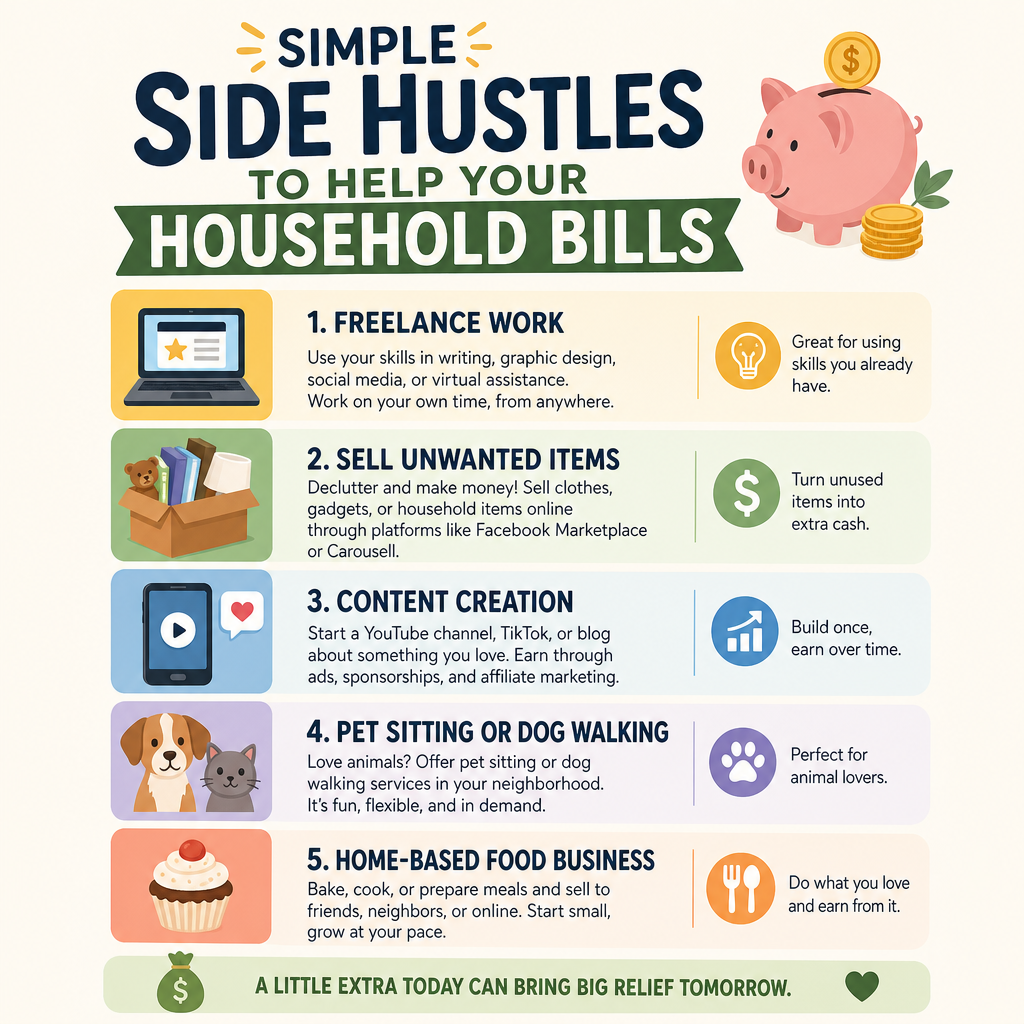
Rising prices can make it feel like your wages are standing still. When energy, food and petrol all creep up at once, it is easy to worry about how the next bill will be paid. A simple side hustle can ease that pressure without you needing to take on a second full time job or exhaust yourself working every spare hour.
You do not need special qualifications, big savings or a business plan to bring in a bit of extra cash. In many cases, you can start with what you already have, and build from there. A little organisation and a clear idea of what you are aiming for, such as covering the council tax or topping up the food shop, can go a long way.
Side hustles can be as simple as turning clutter into cash, or making better use of the online accounts you already use. Maybe you have old phones in a drawer, a wardrobe full of clothes you no longer wear, or friends and family who ask you for recommendations anyway. All of these can become small, regular boosts to your household budget.
In this article, we will look at:
- Matched betting for risk managed extra income
- Selling unwanted items like old mobiles and gadgets
- Simple selling apps and platforms, including how to sell on eBay and use the Vinted app
- Survey and rewards sites such as Swagbucks
- Ways to make money referring friends through referral bonuses
None of these are get rich quick schemes, but together they can make your bills feel a lot more manageable.
Start With a Money Check and Clear Goal
Before you dive into any of these ideas, take ten minutes to look at where your money is actually going. Grab your latest bank statement or budgeting app and list your regular bills: rent or mortgage, energy, council tax, food, phone, travel, school costs, and debt payments.
Then decide what you want your side hustle to cover. It might be:
- Your monthly gas and electric
- A weekly food top up
- School shoes and clubs
- A regular extra payment off a credit card
Putting a number on it keeps things realistic. Aiming for an extra £50 to £200 a month is a good starting point for most households. That feels achievable, but still big enough to make a real difference to your budget.
Next, match the idea to your life. Ask yourself:
- When am I free: evenings, weekends, or just odd ten minute pockets?
- Do I prefer something on my phone from the sofa, like surveys, Swagbucks or referrals?
- Am I happy learning something more structured, like matched betting, for a higher return?
- Do I want quick wins, such as selling a few items this month, to see results fast?
Remember, even small amounts build up. An extra £3 here and £10 there can quietly grow into a small emergency buffer over a few months. That cushion, even £100 or £200, can take the panic out of unexpected bills and help you feel more in control while you try different side hustles.
Matched Betting for Risk Managed Extra Cash
Matched betting is a way to use bookmaker offers to make small, predictable profits. You place two bets on the same event, one that something will happen and one that it will not, using a betting exchange. Because you are covering every outcome, you are not hoping to “get lucky”. Instead, you are turning free bets and promotions into cash.
When done correctly, matched betting is not gambling in the usual sense. The idea is to follow a clear method, use calculators, and stick to the numbers, not gut feelings. Many people use a reputable matched betting service that provides step by step guides, software and reminders of the latest offers. This can reduce mistakes, which is important when you are starting.
The basics look like this:
- Open accounts with a few well known bookmakers and a betting exchange.
- Place a small “qualifying bet” that unlocks a free bet offer.
- Use the free bet on one outcome, and at the same time “lay” that outcome on the exchange, so you are covered either way.
- Follow a guide or calculator to get the lay stake right and lock in a profit.
Only ever use money you can afford to set aside for a few weeks, and keep normal gambling completely separate, or avoid it altogether. Matched betting works best if you are organised: track every offer, bet, and profit in a simple spreadsheet. Done carefully, many households use it part time to bring in extra money for bills or debt payments.
Turn Old Stuff Into Cash: Sell Old Mobiles and More
Take a look around your home with fresh eyes. Cupboards, junk drawers, the top of wardrobes and toy boxes often hide things you no longer use. Turning this clutter into cash can free up space and give your household budget a handy boost.
Old electronics are a great place to start. When you sell old mobiles, you can often get a quick payment from recycling companies that give you an instant quote online. Just enter the make and model, post the phone, and they send the money once it is checked. You can sometimes earn more by listing mobiles individually on marketplaces, especially if they are fairly new or in good condition.
Before you sell, wipe all personal data with a factory reset, remove any memory cards, and log out of cloud accounts. Check if the phone is unlocked, as unlocked phones often sell for more. Take clear photos in good light from several angles, and be honest about scratches, battery life, and any faults so buyers know what to expect.
Once you have tackled mobiles, look at other easy wins: tablets, games consoles, kids toys in good condition, books, and small appliances that still work. These items can sell surprisingly quickly.
To avoid letting anything go too cheaply, do a quick price check. Search for the same item on a couple of selling sites, and look at what similar listings have actually sold for, not just the asking price. That way you can set a fair price and squeeze the most value out of things you no longer need.
Easy Selling from Home: Sell on eBay and Use the Vinted App
Selling from home can fit around family life, and two of the easiest options are to sell on eBay and use the Vinted app.
To sell on eBay, start by creating a free account, then click “Sell” to list an item. Choose a clear title, add a few bright photos in good daylight, and write a short, honest description that includes brand, size, condition, and any flaws. Use the “completed listings” filter to see what similar items actually sold for. This helps you set a realistic price so things move quickly without being underpriced.
Remember postage costs. Weigh your parcel in its packaging, check prices with Royal Mail or courier sites, and decide whether to offer free postage by building the cost into your price, or to charge it separately. Get proof of postage for anything you send.
eBay works well for mixed household items: gadgets, hobby bits, games, and bundles of kids clothes or toys.
For clothes and accessories, the Vinted app is very simple. There are no listing fees in many cases, which keeps more money in your pocket. Take photos on your phone, upload in minutes, choose a size category for the parcel, then use the built in postage labels that buyers usually pay for. Drop the parcel at the chosen pick up point and you are done.
Try a small declutter challenge: list just five items this week. When the sales money arrives, use it to knock a bit off a bill or add to a small savings pot to give your budget more breathing room. How to Make Your First £500 Selling Unused Items on eBay
Earn Little Bits Often: Swagbucks and Similar Reward Sites
Swagbucks and similar reward sites can work quietly in the background to bring in little boosts of cash. Instead of doing big chunks of extra work, you earn small amounts for simple online tasks, then cash them out when you reach a target.
With Swagbucks, you earn “points” for things like filling in surveys, watching short videos, using their search bar, or clicking through their links when you shop online. Those points can then be turned into gift cards or cash.
It is important to keep expectations realistic. Swagbucks will not replace a wage, but it can make a difference with smaller costs. Many people use it to cover birthday presents, streaming subscriptions, school non‑uniform days, or to top up the food shop at tight times of the month.
Common ways families use Swagbucks include doing a survey or two while watching TV in the evening, earning cashback when buying groceries or household items online, or trying to hit the site’s “daily goal” for a small bonus.
When it comes to payouts, you can usually choose from supermarket or Amazon gift cards, or take cash through services like PayPal. Cash can go straight toward bills or fuel, while gift cards protect a bit of your budget for food or essentials.
To make it worth your time, be choosy. Focus on better paying surveys, cashback offers you were going to buy anyway, and easy daily bonuses. Skip long, low paying tasks that eat up time for pennies.
Make Money Referring Friends and Sharing Deals
Referral programmes are a simple way to make money referring friends, using things you already like. A company gives you a unique link or code. When someone signs up through it, or spends money, you get a reward such as cash, credit or gift cards.
You can find referral schemes in lots of places. Swagbucks regularly runs bonuses when friends join and earn points. Shopping apps often give both you and your friend a credit toward groceries or toiletries. Food delivery services may offer discounts for you both when a new customer places their first order. Bank switching offers can be particularly valuable, sometimes paying £100 or more when you move your account and meet certain conditions.
The key is to share in a helpful, honest way. Tell people how you actually use the app or service, what you like, and any downsides. Post your link in money saving groups, or mention it when someone asks for a recommendation. Avoid bombarding friends and family, which can put people off.
Over a year, stacking small refer a friend rewards can quietly add up. A tenner here and there from different apps can cover a bill, a school trip, or a bit of Christmas shopping.
Always read the terms and conditions. Check what your friend has to do, when rewards are paid, any limits per person, and whether the offer might affect things like credit checks for bank accounts. That way there are no surprises, just extra money you can plan around.
Pulling It All Together and Staying Motivated
You now have a menu of simple ways to boost your budget. Matched betting can bring in chunks of extra cash if you stay organised and follow guides carefully. You can sell old mobiles and other clutter for quick wins. You can sell on eBay for all sorts of household bits, and use the Vinted app for clothes and shoes. Swagbucks can drip feed gift cards or cash, and you can make money referring friends to services you already use.
You do not need to do everything. Pick one or two easy ideas that feel manageable right now. For example, clear out a cupboard and list five items, then try a week of Swagbucks in the evenings. Once those feel normal, you can decide if you want to add something else.
Keep a simple monthly tracker, on paper or in a notes app. Write down each side hustle and what it brought in. Next to it, write its job: gas bill, food top up, school shoes, or paying extra off a credit card. Seeing the money linked to real goals makes it more motivating.
Stay safe as you go. Use strong passwords, avoid public Wi‑Fi for banking or betting accounts, and protect your personal data. Keep receipts, emails, and screenshots for anything higher value or any offers, in case there is a problem later.
The clear takeaway: small, steady actions matter most. Even an extra £50 or £100 a month can ease money stress. Start small, stick with it, and let those little amounts quietly strengthen your household finances. Find out about side hustles and the Tax Man.