Leaving a light on might feel harmless, but those glowing bulbs can quietly add up to a big slice of your power bill. Think about the rooms that stay lit for hours at a time, like kitchens, living rooms, hallways and porch lights. Each traditional bulb in those fixtures is sipping electricity the whole time, even if you are barely noticing.
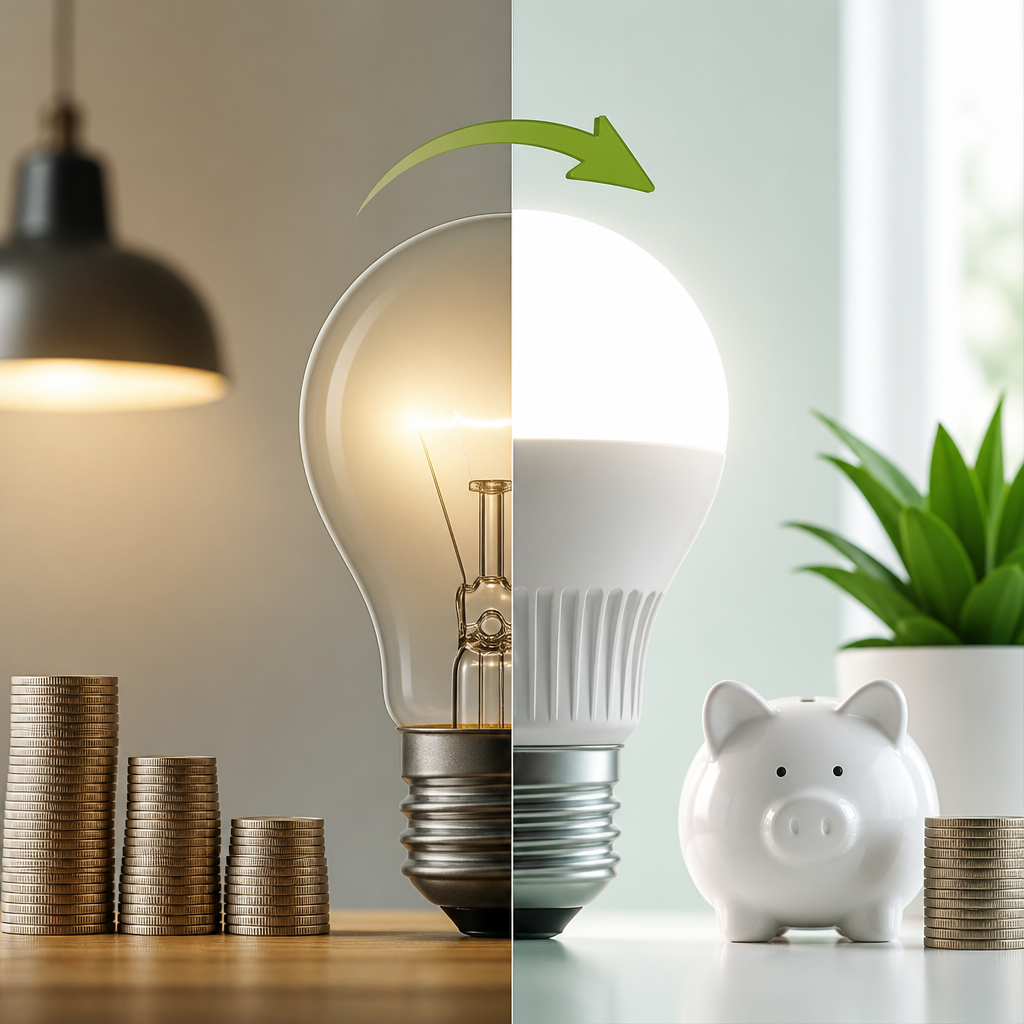
This is where LED bulbs come in. Swapping to LEDs is one of the simplest home upgrades you can make. They use far less energy than old style incandescent bulbs while giving you the same comfortable, bright light. You do not have to accept harsh, blue light or strange shapes anymore. Today’s LEDs look like regular bulbs, come in warm and cozy tones or crisp daylight, and are made to fit into most fixtures you already own.
The best part is that this is mostly a one time change. Once you switch a bulb to LED, it keeps paying you back on every power bill, month after month. You cut your lighting costs, keep your home just as inviting, and barely have to think about it again.
How LED Bulbs Actually Save You Money
Here is where the numbers start to add up in your favor. To get the same brightness as a traditional 60 watt bulb, a CFL usually uses around 13 to 15 watts, and an LED uses only about 8 to 10 watts. That means an LED can use roughly 80 percent less electricity than an old incandescent and still give you the same light.
Even on a single bulb, this matters. Suppose you have one 60 watt incandescent that runs 3 hours a day. At typical electricity rates, swapping it for a 9 watt LED can easily save 8 to 10 dollars a year. Most homes have 20 to 40 bulbs, and many are on far more than 3 hours a day, so it is common for a full home switch to save 150 to 300 dollars every year.
LEDs also last much longer. A standard incandescent might last 1,000 hours, a CFL around 8,000, and many LEDs 15,000 to 25,000 hours. That means far fewer trips up the ladder and fewer replacement packs in your cart.
Because LEDs waste less energy as heat, they also help keep rooms cooler, taking a little strain off your air conditioner in the warmer months.
Choosing the Right LED Bulbs for Each Room
To pick the right LEDs, start with brightness. Instead of watts, look for lumens. As a rough guide: 450–800 lumens for table lamps and hallways, 800–1,100 for living rooms and bedrooms, 1,100–1,600 for kitchens and home offices, and bright, focused bulbs for bathrooms and outdoor security.
Next, choose the color of the light. “Warm white” or “soft white” (around 2700–3000K) feels cozy and relaxing, great for living rooms and bedrooms. “Bright white” or “cool white” (3500–4100K) suits kitchens and bathrooms where you want things to look crisp. “Daylight” (5000K and up) works well in home offices, garages and work areas where clear, energetic light helps you focus.
You will also see different shapes and bases. A19 is the classic household bulb shape. BR30 fits many recessed ceiling cans. GU10 often appears in track lighting, and candelabra bulbs go in chandeliers and some sconces. Match the base and shape to what is already in your fixture.
If you like dim lighting in the evenings, choose bulbs labeled “dimmable” and pair them with a compatible dimmer switch. This helps prevent annoying flicker and buzzing while saving even more energy.
A Simple, Step by Step Plan to Switch to LEDs
Start with the lights that work the hardest. Kitchen ceiling fixtures, living room lamps and recessed cans, and outdoor or security lights are usually on the longest, so swapping these to LEDs first gives you the biggest and fastest savings.
Next, do a quick “bulb inventory.” Walk through your home with a notepad or your phone. For each fixture, jot down the room, fixture type, how many bulbs it uses, and the wattage printed on each bulb. This gives you a simple shopping list and helps you see where the biggest energy hogs are.
If your budget is tight, you do not have to replace everything at once. You can:
- Replace bulbs as they burn out, choosing LEDs each time
- Focus on one floor or one high use room at a time
As you swap bulbs, set aside the old ones safely. Standard incandescents and halogens can usually go in the regular trash, but check your local rules. CFLs contain a small amount of mercury and should never go in household garbage. Many hardware stores and community recycling centers accept them for proper disposal.
Upfront Costs, Rebates, and Smart Shopping Tips
LED prices can cause a little sticker shock, especially if you are used to cheap incandescent bulbs. The key difference: an LED might cost a few dollars up front, but it usually pays for itself in energy savings within 6 to 18 months, then keeps cutting your bill for years. One LED can last as long as 10 or more old style bulbs, so you buy and change bulbs far less often.
Before you shop, check your utility’s website for rebates or instant discounts. Many power companies partner with local stores so the sale price on LED multipacks is already reduced at the shelf. Watch for holiday or spring “energy event” sales too, when prices often drop even lower.
When comparing bulbs, focus on lumens for brightness and color temperature for how the light feels, warm or cool. Look for the Energy Star label, which helps weed out low quality products. Skip ultra cheap no name LEDs, since they are more likely to flicker or fail early.
If you like gadgets, consider smart LED bulbs. Built in timers, dimming, and app or voice control can trim a bit more energy use and add a lot of convenience.
Enjoy a Brighter Home and a Smaller Power Bill
LEDs quietly improve your home in a lot of ways at once. They trim your power bill every month, run cooler so your rooms stay more comfortable, and last for years, which means far fewer trips up a ladder or runs to the store for replacements. Once you get used to flipping a switch and forgetting about burnt out bulbs, it is hard to go back.
For all the benefits, switching is simple. You are not remodeling or rewiring, just changing bulbs. Many homeowners can upgrade the most used fixtures in a single afternoon and start seeing savings on the very next bill.
Choose one easy starting point: the kitchen, living room, porch light, or any space that stays on for hours. Swap those bulbs for LEDs, jot down the date, and then compare your next couple of power bills. The difference from just a handful of bulbs may surprise you.
In the end, this is a small change with a big payoff. Every watt you stop wasting on old bulbs is money you can put toward things you actually enjoy buying for your home. The clear takeaway: start with a few key fixtures, then let the savings and comfort convince you to keep going.